Roof Repair Cost Factors And Estimates
Estimating roof repair costs requires knowing material, labor, and damage severity factors to avoid surprises. National Roofing Services provides transparent breakdowns and local estimates so homeowners can plan and budget confidently. Reach out to 303-555-7788 to get a tailored cost assessment based on an on-site inspection. This article offers a clear framework for understanding charges and preparing financially for necessary repairs. We focus on honesty and value in every recommendation.
Accurately forecasting roof repair expenses starts with knowing which variables drive price and how they interact. At a high level you should consider the type of roofing material, the extent and location of damage, accessibility and safety concerns, local labor rates, and any necessary permits or code upgrades. National Roofing Services believes transparency is essential: we outline typical cost ranges, what to expect during an inspection, and how to reduce the risk of surprise charges. If you want a tailored evaluation, call 303-555-7788 to schedule an on-site estimate.
Understanding the primary roof repair cost factors
Roof repair cost factors and estimates hinge on five core elements: material, labor, damage severity, roof geometry, and local market conditions. Material choice alone can change a project from a few hundred dollars to several thousand, while labor intensity - driven by steep slopes, multi-level roofs, or working over landscaping - adds hours and safety costs. When damage is limited to a few shingles or flashings, repairs are straightforward; when underlying decking or structural components are compromised, the job becomes more of a restoration and the price increases significantly.
Practical inspection steps can help separate cosmetic issues from structural ones. A qualified roofer will check the roof from multiple angles, inspect attic and soffit spaces for signs of water intrusion, and test suspect areas to determine whether the damage is isolated or systemic. Expect clear documentation in a written estimate: line items for material, labor, tear-off (if needed), underlayment, flashing, permit fees, and disposal. A good estimate gives you the context to compare options rather than a single lump-sum number that hides the details.
Key factors to review during an estimate
- Material type and warranty expectations (asphalt shingle, metal, tile, rubber, etc.).
- Roof size in square footage and slope/pitch, which affect labor time and materials.
- Extent of damage: isolated leaks, multiple penetrations, or extensive decking rot.
- Access and safety-scaffolding, lifts, and traffic control can add to costs.
- Local permit and disposal requirements, and potential code upgrades (ventilation, insulation).
Common materials and typical price ranges
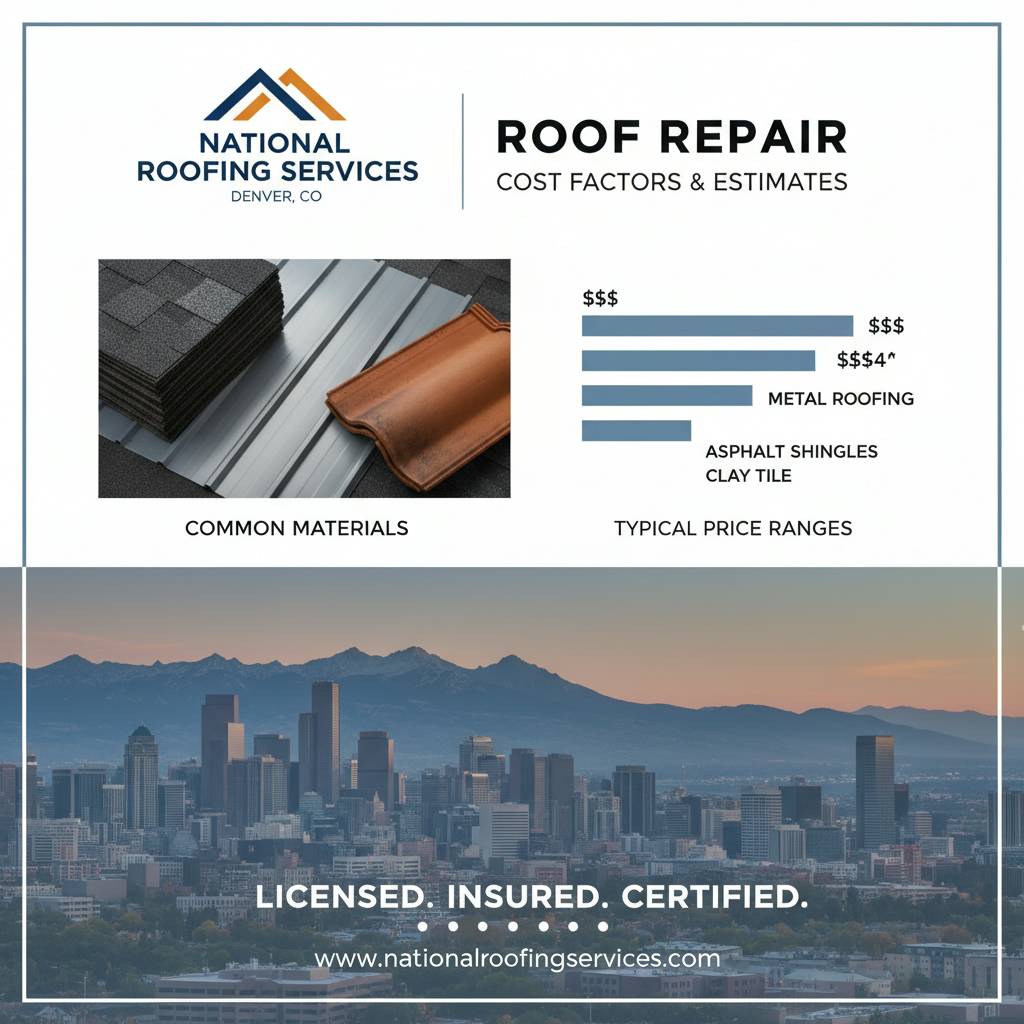 Choosing the right material matters for performance and price. Asphalt shingles remain the most common and generally the most economical option for repairs and replacements. Metal, tile, and synthetic systems cost more up front but offer longer lifespans and sometimes lower lifetime maintenance. Always compare costs on the same basis: price per square foot, expected life, and warranty coverage. Region and brand selection further influence the final numbers.
| Material | Typical cost (per square foot) | Typical lifespan |
|---|---|---|
| Asphalt fiberglass shingles | $2-$5 | 20-30 years |
| Architectural laminate shingles | $3-$7 | 25-35 years |
| Metal roofing (panels or shingles) | $6-$12 | 40-70 years |
| Concrete or clay tile | $7-$15 | 50 years |
| EPDM/TPO flat roofing | $3-$8 | 20-30 years |
These ranges are a starting point. For a small repair - replacing a few shingles and sealing flashings - you may see charges in the $100-$1,000 range, depending on access and minimum trip fees. Larger repairs that involve replacing underlayment, addressing rot, or re-flashing chimneys and skylights often move into the $1,000-$5,000 range. Full replacement costs vary by material and complexity and can extend well beyond these ranges.
Labor, complexity, and hidden charges to anticipate
Labor is often the most significant single component of a roof repair estimate. Experienced crews are faster and more precise but cost more per hour; however, choosing the cheapest crew can lead to incomplete repairs and higher costs later. Labor rates vary regionally, seasonally, and by licensing requirements. Complexity increases labor time: steeper slopes, multiple roof facets, dormers, and many penetrations all require careful, slower work to ensure durable results.
Hidden charges can catch homeowners by surprise unless they are documented up front. Common additions include fees for material disposal, special hauling of old roofing, additional underlayment due to code requirements, plywood replacement when decking is found to be rotten, and permit fees. A professional estimate should call out these possibilities and include allowances or contingency line items so you aren't hit with unexpected invoices after work begins.
Common hidden charges
- Disposal and landfill fees
- Decking replacement (rotten or water-damaged sheathing)
- Upgrades to meet current building codes (ventilation, flashing details)
- Scaffolding, lifts, or traffic control for difficult access
- Emergency or expedited scheduling charges
How to build a reliable cost estimate: step-by-step framework
Start with a detailed on-site inspection. Measurements should include actual roof area, pitch, number of penetrations, and condition of flashings and underlayment. Photographs and attic inspection notes should accompany the estimate. Once you have a clear scope, request multiple written quotes that break out materials, labor, tear-off, disposal, and permits. Comparing line items is far more informative than comparing two bottom-line numbers.
Use a contingency allowance. Even well-documented inspections can miss hidden rot or structural issues, so set aside a contingency of to of the written estimate. If you choose higher-end materials or request warranty upgrades, build those choices into the initial estimate instead of adding them mid-job. Finally, confirm payment milestones, warranties, and cleanup responsibilities in writing before work begins to avoid disputes and unexpected costs.
- Schedule an on-site inspection and document the roof condition.
- Request 2-3 itemized written estimates from reputable contractors.
- Confirm permits, disposal, and any code upgrade requirements.
- Allocate a 10[%-%] contingency for unforeseen repairs.
- Verify warranty terms for materials and workmanship.
Insurance considerations, warranties, and financing
 If your damage is storm-related, check homeowner insurance coverage before scheduling repairs. Document damage with photographs and keep a record of communications with your insurer. Some policies cover full replacement, while others apply depreciation and only reimburse partial amounts. Understand your deductible and whether the insurer requires contractor estimates or will assign an adjuster to confirm costs.
Warranties matter. Manufacturer warranties cover materials but often require specific installation practices to remain valid, while workmanship warranties are provided by the contractor and vary widely in length and terms. Make sure warranty information is included in your estimate. If paying out of pocket, ask about financing options many reputable contractors offer - short-term no-interest plans or low-rate financing can smooth the cost burden while ensuring high-quality workmanship.
Short real-world examples to illustrate variability
Case example 1: A suburban home with a single-level roof experienced localized leaks around a chimney. The inspection found damaged flashing and a small area of underlayment rot. Repair included flashing replacement, underlayment patch, and three bundles of architectural shingles. Total cost: $750-$1,200. The job was completed in one day with a 2-year workmanship warranty.
Case example 2: An older two-story home had multiple leaking areas and wet insulation in the attic. The inspection revealed extensive deck replacement for several areas plus replacement of aging shingles. Because of steep sections and added scaffolding, labor increased. Total cost: $4,500-$9,000 depending on the shingle selected and the extent of deck replacement. The homeowner chose a higher-grade shingle and a 5-year workmanship warranty for peace of mind.
How to choose a contractor and questions to ask
Choosing a contractor is as important as choosing materials. Look for licensed, insured professionals who provide detailed, itemized estimates and who can supply references from recent local projects. Verify business credentials and read recent reviews focusing on durability of repairs and post-job cleanup. A reputable contractor will explain trade-offs, recommend durable solutions rather than upsells, and communicate a clear timeline.
Ask these questions during your initial consultation:
- Can you provide a written, itemized estimate with material specifications?
- What warranties do you provide for materials and workmanship?
- Do you carry general liability and workers' compensation insurance?
- Who will be the project manager and how will we communicate during the job?
- What permits or inspections will be required in my area?
Final recommendations and how National Roofing Services helps
Preparing financially for roof repairs means understanding the interplay of material quality, the severity of damage, and labor complexity. Prioritize accurate on-site inspections, compare itemized estimates, and include a contingency in your budget. Small, timely repairs can prevent larger, costlier replacements later, and clear documentation will help if you use insurance or financing.
National Roofing Services offers transparent, local estimates based on on-site assessments and a commitment to honest pricing. We walk homeowners through the choices, explain trade-offs, and provide clear line-item estimates that reflect real local labor and material costs. For straightforward answers and a tailored cost assessment, contact us today - call 303-555-7788 to schedule an inspection.
When you are ready to get started, reach out and we will provide a clear, itemized estimate and explain the next steps. Trust National Roofing Services to help you plan, budget, and protect the long-term value of your home. Call 303-555-7788 to arrange an on-site consultation and get a reliable assessment backed by experience.