
Emergency Vs Scheduled Roof Repair Timeline
Understanding the difference between emergency and scheduled roof repairs helps homeowners prioritize safety and budget. National Roofing Services outlines the timelines and decision points for urgent leaks versus planned maintenance to reduce disruption. Call 303-555-7788 for immediate guidance on assessing urgency and arranging appropriate service. This guide will help readers know when to act now and when to plan a repair.
Deciding whether a roof problem requires immediate attention or can wait for a scheduled repair is one of the most practical skills a homeowner can develop. The phrase "emergency vs scheduled roof repair timeline" matters because acting at the right time minimizes safety risks, reduces repair costs, and prevents secondary damage to interiors. In this guide you'll find clear signs of emergencies, typical response windows, and how to plan routine work to fit your budget and lifestyle.
Why timing matters: safety, cost, and disruption
When a roof issue is left to worsen, what starts as a small leak quickly becomes a structural, mold, or electrical problem. Safety should always be the main consideration: water compromising rafters or creating slippery surfaces during a storm can lead to injury or collapse. Timely action, whether emergency stabilization or scheduled replacement, reduces those hazards and protects your family and belongings.
From a cost perspective, quick mitigation often saves money. An emergency tarp or patch might cost $75-$200, but ignoring an active leak can lead to interior damage that adds thousands to the bill. Conversely, scheduling regular maintenance and minor repairs on your timeline can stretch the life of your roof and avoid the premium prices and supply delays that come with last-minute calls during storm seasons.
Emergency roof repairs: when to act immediately
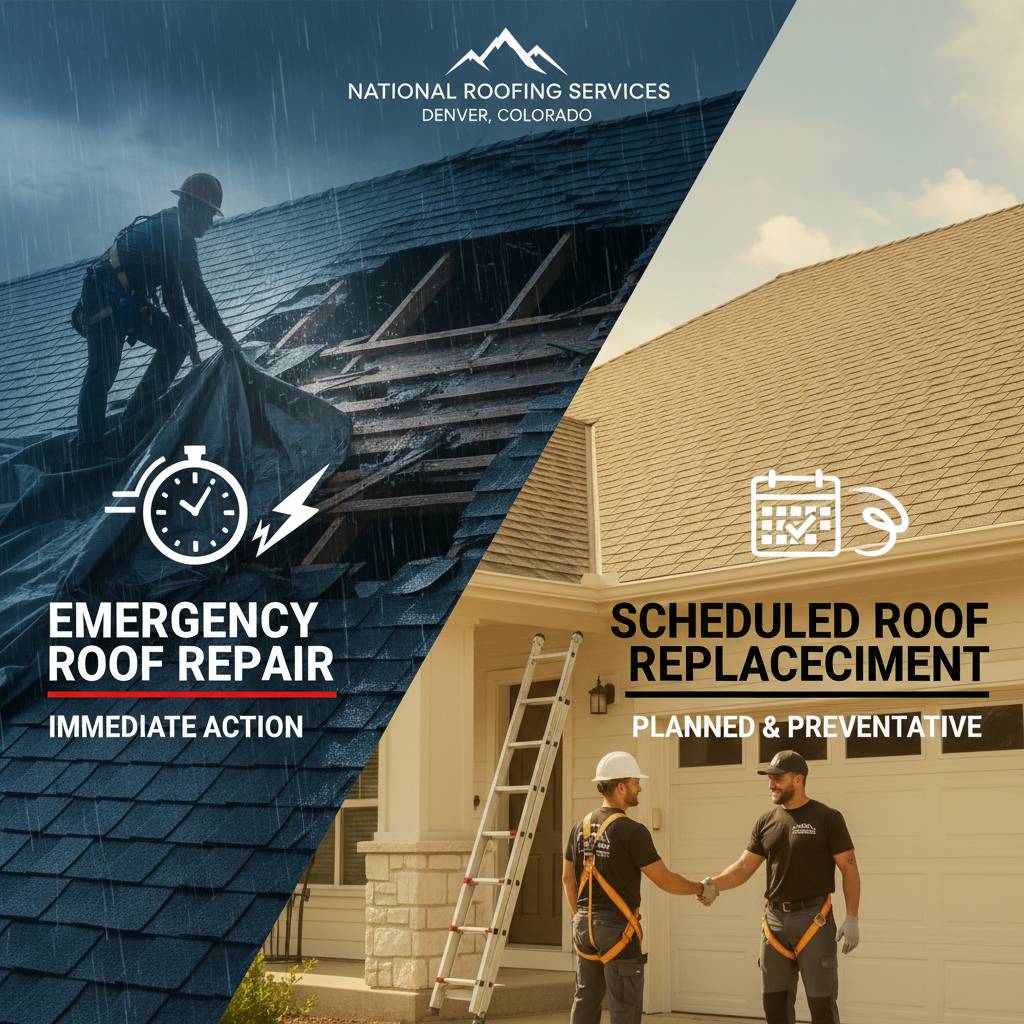 An emergency roof repair is typically defined by immediate risk: active water intrusion, visible sagging, exposed structural members, or damage after severe weather. If you can safely observe signs like water dripping through a ceiling, widespread wet insulation in an attic, or a roof deck that visibly dips, you should treat the situation as urgent. The goal in an emergency is mitigation first, permanent repair later.
Common signs that warrant emergency action
- Active interior leaks-water dripping through ceilings or walls.
- Large areas of wet or sagging attic insulation.
- Roof deck depressions or sagging that indicate structural compromise.
- After major storms: missing shingles, exposed underlayment, or downed tree limbs.
- Electrical sparks or power issues connected to water intrusion.
Typical emergency response timeline
Emergency responses are measured in hours to a few days, depending on severity. A professional should be able to provide initial advice over the phone immediately, arrive within 24 hours for temporary stabilization like tarping or patching, and schedule a full assessment and permanent repair within a few days to a couple of weeks. If weather is severe, expect response times to extend slightly as crews prioritize the most dangerous calls.
Initial mitigation usually involves identifying active leak points, clearing debris, applying temporary patches or tarps, and documenting conditions for insurance. These steps are focused on stopping further damage; permanent roofing work may require materials, permits, or a more extensive crew and therefore takes place after mitigation is complete.
Scheduled roof repairs: planning, inspections, and timelines
Scheduled repairs are planned, non-urgent activities meant to extend roof life or address known but stable issues. Typical scheduled work includes shingle replacement in small areas, flashing updates, gutter replacement, and full roof replacements that are timed to avoid storms and busy seasons. Planning gives you control over cost, materials, and contractor selection.
For scheduled repairs, timelines vary with scope. Small repairs can be booked within a week or two and completed in a day. Re-roofing projects usually require a few weeks of planning-inspection, permit acquisition if needed, and material ordering-followed by one to several days of on-site work depending on roof size and complexity. Interior work related to roof repair, like drywall patches, can be scheduled after the roof is watertight.
Regular inspections-annual or after major weather events-are the backbone of a good scheduled maintenance program. Catching a failing flashing or aging shingle before it becomes an active leak is both prudent and budget-friendly. Aligning inspections with seasons (late spring or early fall) helps avoid extreme weather delays and allows time for scheduling in busy seasons.
Decision framework: triage for homeowners
When you discover a roof problem, use a simple triage approach: assess safety, estimate rate of damage, and decide whether temporary mitigation or immediate full repair is required. Safety comes first-if there's structural collapse risk or exposed electrical components, evacuate and call professionals. If damage is limited and not actively worsening, scheduling a planned repair may be the right choice.
- Ask: Is water actively entering the home? If yes, treat as emergency.
- Ask: Is the attic or interior showing signs of rapid spread (mold, dripping)? If yes, prioritize immediate action.
- Ask: Can the issue be mitigated temporarily (tarp, bucket, roof patch)? If yes, schedule a permanent fix within days to weeks.
- Ask: Is replacement inevitable due to age or multiple damage points? If yes, begin planning now to avoid emergency situations later.
Document photos and dates as you go. Clear documentation makes it easier to file insurance claims and helps contractors recommend the right timeline. Keep a small emergency kit-roofing nails, tarp, rope-and a trusted contractor contact so you can respond quickly when a problem appears.
How emergency action affects insurance, warranties, and costs
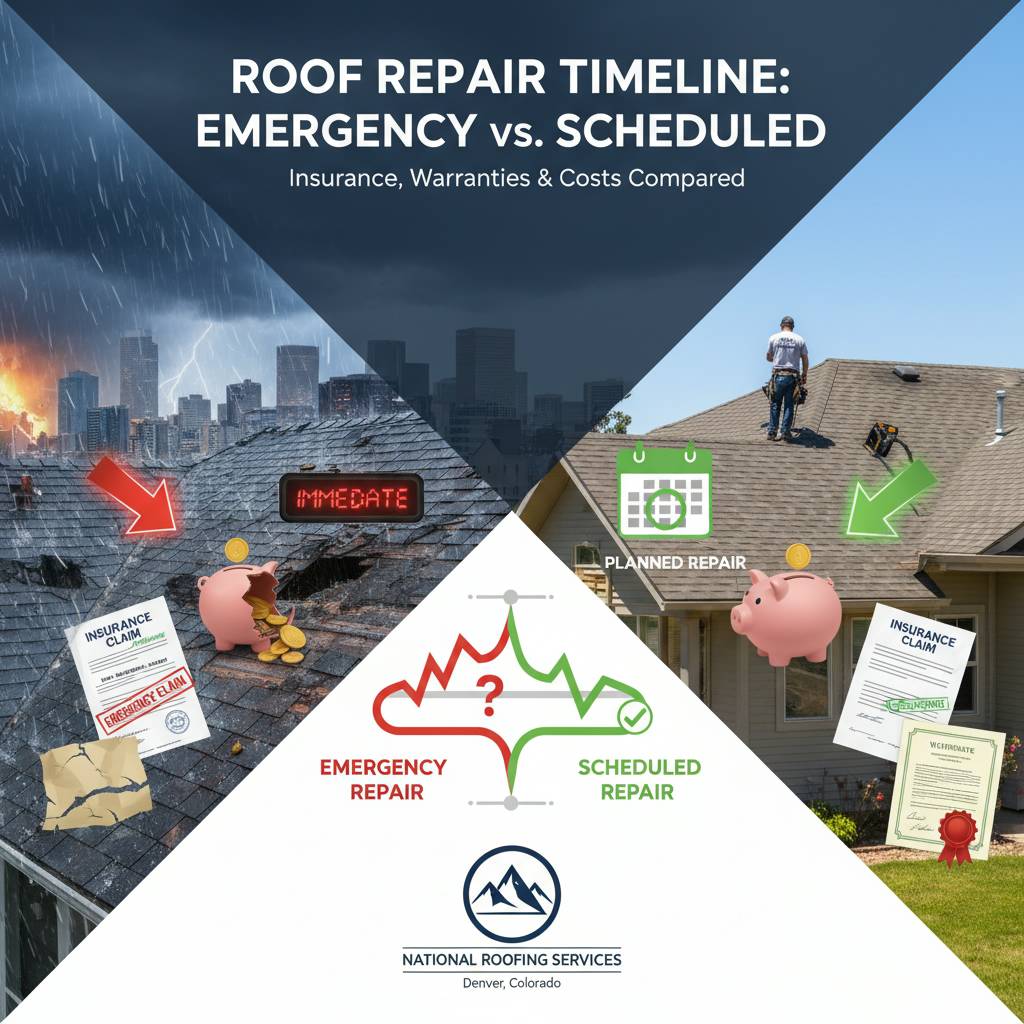 Insurance policies generally require homeowners to mitigate damage after an event-this means doing what you reasonably can to stop ongoing harm, like putting up a tarp after a storm. Failing to do so can jeopardize claims. For that reason, even temporary emergency measures should be done professionally if possible and documented with photos and receipts.
Warranties can be affected by the timing and type of repair. Manufacturer warranties often require proper installation and maintenance; using a licensed contractor for both scheduled and emergency repairs helps preserve warranty rights. When an emergency repair is followed by a permanent fix, keep invoices and warranty documents together so future questions about coverage are clear.
Cost considerations: emergency mitigation tends to be lower than full repairs but higher per unit of work because of expedited service. Typical emergency mitigation might cost $75-$200 for a tarp and minor patches. Permanent repairs and replacements vary widely: small repair jobs may be $300-$1500 while partial replacements or steep-slope shingle re-roofs commonly run several thousand dollars depending on materials and labor.
Choosing the right contractor and what to expect
When selecting a contractor for either emergency or scheduled work, look for local licensing, insurance verification, references, and clear written estimates. A good contractor will explain the timeline: initial triage and mitigation in hours to a day for emergencies, and a clear plan for permanent repair or replacement within a few days to a few weeks for both emergencies and scheduled projects.
Expect transparent communication. During winter or storm seasons, ask about potential scheduling delays and whether the contractor uses subcontractors. For scheduled projects, request a written scope of work, timeline, payment terms, and warranty information. For emergency work, get a written description of temporary measures and a follow-up plan for the permanent repair.
- Checklist before hiring: license and insurance; local references; written estimate; project timeline; cleanup and disposal plan.
- Red flags: demands for full payment upfront, lack of documentation, door-to-door estimates after a storm.
Comparison: emergency vs scheduled roof repair timeline
| Characteristic | Emergency Repair | Scheduled Repair |
|---|---|---|
| Response time | Hours to 1-3 days for mitigation | Days to several weeks for planning and execution |
| Primary goal | Stop damage and ensure safety | Complete repair or replacement with long-term durability |
| Cost | Lower for mitigation ($75-$200), higher per urgency | Planned costs vary widely ($300-$1500 for minor work) |
| Documentation | Photos and emergency receipts for claims | Detailed estimates, permits, and warranties |
Frequently asked questions and quick tips
Can I wait a few weeks to fix a small leak?
Small leaks can escalate quickly, especially during rainy seasons. If a leak is intermittent and not actively wetting interior finishes, you might manage it temporarily and schedule a repair within a week or two, but monitor closely. When in doubt, have a professional evaluate the leak to avoid hidden damage.
What should I do immediately after a storm?
Check for obvious signs of damage from a safe location, take photos, move valuables away from affected areas, and call a trusted contractor for an assessment. If water is entering and causing interior damage, arrange emergency mitigation immediately-this is also important for insurance purposes.
How often should I have my roof inspected?
At minimum, schedule a professional inspection every 1-2 years and after severe storms. Older roofs or those in harsh climates may benefit from more frequent checkups. Regular inspections catch small issues before they become emergencies.
Will temporary emergency fixes void my warranty?
Temporary fixes typically do not void a warranty if they are reasonable and performed to prevent further damage. Keep documentation and choose reputable contractors so you can demonstrate proper mitigation if a warranty or insurance question arises.
Real-world example: a quick case study
Homeowner A noticed damp spots after a heavy storm and discovered a small drip near a bedroom ceiling. They called a local contractor who arrived within 12 hours, installed a temporary patch and a tarp, and took photos for the homeowner's insurance. The crew scheduled a permanent repair for five days later when materials arrived. Because the homeowner acted quickly, interior damage was minimal and the claim process proceeded smoothly.
Homeowner B ignored a minor missing shingle until a spring thunderstorm led to a sudden, widespread attic leak. The emergency required immediate mitigation, emergency electricians to address water near wiring, and a more costly full roof section replacement. Acting earlier would have reduced the scope and cost of the repair.
Final notes and practical next steps
Prioritize safety and documentation. When you encounter possible roof damage, assess risk, photograph the issue, and either mitigate immediately or schedule a trusted professional for a timely repair. Keeping an annual inspection on your calendar and repairing small issues promptly is the best strategy to avoid expensive emergency calls.
If you're unsure whether a problem is an emergency or can wait for a scheduled repair, National Roofing Services is ready to help with fast, practical advice and rapid mitigation when necessary. For immediate assistance or to arrange an inspection, call 303-555-7788.
We offer clear timelines, transparent pricing, and documented plans so you can choose the best path for safety and budget. Reach out to National Roofing Services today to get a professional assessment and a recommended schedule for repairs, whether urgent or planned.